
For three or four weeks each autumn, Srinagar's chinar trees turn copper, crimson and gold. Here is where to see them, when to go and how to plan the trip around them.
Walk into Naseem Bagh on a still November morning and the first thing you notice is the sound. Leaves the size of a hand crunch underfoot, and every gust brings down another slow shower of copper and red. Above you, trees planted in the Mughal era hold what is left of their colour against a pale blue sky.
This is chinar season in Kashmir, and it is short. For roughly three to four weeks between late October and mid-November, the Kashmiri plane tree (Platanus orientalis, the boune in Kashmiri) turns from green to yellow, then to rust, crimson and a deep burnt orange before the leaves fall. If you time it right, Srinagar becomes one of the most photogenic cities in Asia.
When is chinar season in Kashmir?
The colour usually starts to turn in the last week of October and peaks in the first half of November. By the end of November most trees are bare. The exact window shifts by a week or so each year depending on night temperatures and early snowfall, so we watch it closely for our guests and adjust plans as the season moves.
A simple rule we use:
- Late October: yellow and green, with the first red trees. Fewer visitors, softer light.
- First two weeks of November: the peak. Deep reds and oranges, carpets of leaves in the gardens.
- Late November: most leaves down, cold mornings, and the first chance of snow in Gulmarg and Sonamarg.
Daytime temperatures in Srinagar in this period are usually comfortable for walking, while mornings and evenings are cold. Pack layers, not a single heavy coat.

Where to see the best chinar colours in Srinagar
Naseem Bagh
The oldest chinar garden in the valley, on the Hazratbal side of Dal Lake within the university campus. Hundreds of mature trees stand in rows, and on a peak-week morning the ground disappears under leaves. Go early: the light is gentle and the paths are quiet before ten.
Nishat and Shalimar Bagh
The two great Mughal gardens on the eastern shore of Dal Lake are framed by old chinars along their terraces and water channels. Nishat has the wider view across the lake; Shalimar is quieter and more enclosed. Both are best in late afternoon when the sun lights the leaves from behind.
Char Chinar
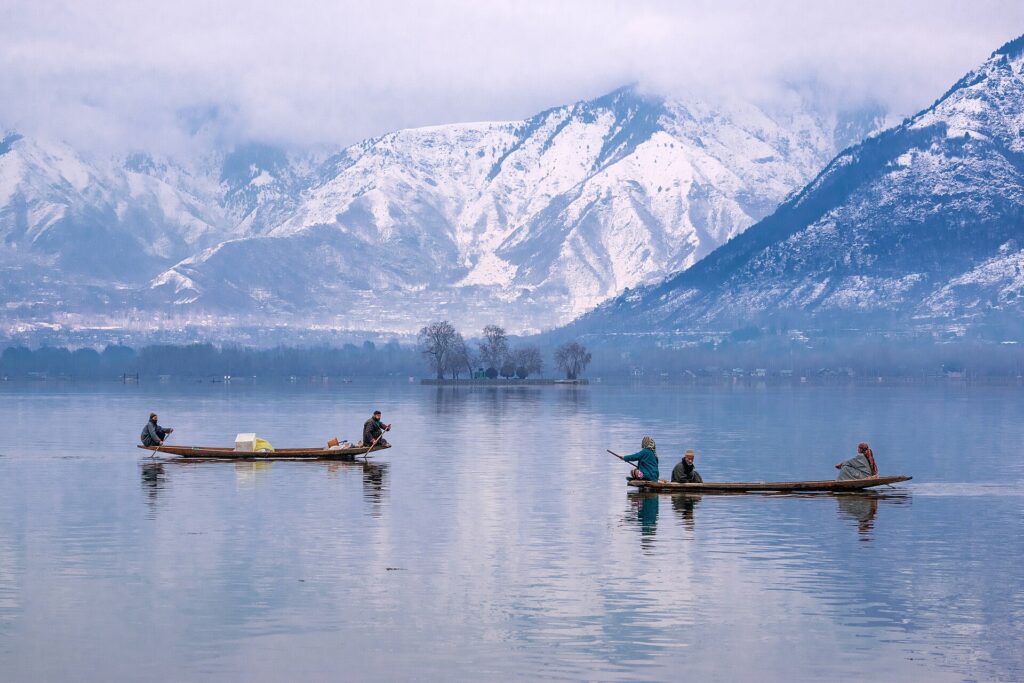
A tiny island in Dal Lake with four chinar trees at its corners, reached by shikara. In peak week the four crowns turn red together, and the reflection on a calm morning is the image most people come for. Ask your boatman to go out at sunrise.
Chinar Bagh and the Jhelum banks
The old city stretches along the Jhelum, and its riverbanks and the Chinar Bagh area have trees older than most of the buildings around them. A slow walk here, followed by kahwa in a local café, shows you everyday Srinagar in autumn.
Badamwari and Hari Parbat
Best known for almond blossom in spring, the gardens at the foot of Hari Parbat also have fine autumn colour and views over the old city's rooftops.
Beyond Srinagar: chinar trails worth the drive
If you have an extra day or two, the colour continues well outside the city.
- Kokernag and Verinag in the south have spring-fed gardens lined with chinars and are rarely crowded in autumn. See our guide to Kokernag.
- Pahalgam and the Lidder valley turn gold with poplar and willow alongside the chinars, and the road from Srinagar passes saffron fields at Pampore, where the purple saffron crocus flowers in late October and early November. Read more about Pahalgam.
- The Mughal Road and the villages of the Sindh valley on the way to Sonamarg show autumn in a quieter, rural light.
How to photograph the chinars
- Go early or late. The leaves glow when the sun is low and behind them. Midday light flattens the colour.
- Look down as well as up. A single red leaf on a dark stone path often tells the story better than a wide shot.
- Use the water. Dal Lake, the garden channels and the Jhelum all give you reflections on still mornings.
- Respect the gardens. Do not shake branches to bring leaves down, and stay on paths in the Mughal gardens.
A 5-day chinar season itinerary
- Day 1 – Srinagar: arrive, settle into a houseboat or hotel, and take a sunset shikara ride past Char Chinar.
- Day 2 – Srinagar gardens: Naseem Bagh at sunrise, breakfast, then Nishat, Shalimar and Chashme Shahi in the afternoon light.
- Day 3 – Pahalgam: drive via the Pampore saffron fields and Avantipora ruins to the Lidder valley; walk along the river in the evening.
- Day 4 – Kokernag and back: a slow drive through the southern villages and gardens, returning to Srinagar.
- Day 5 – Old city and departure: a walk along the Jhelum and through the old city before your flight.
Our Kashmir Classic follows a similar route and can be timed to the chinar peak. If you would rather build your own version, choose your places and dates on Create Your Trip and a local planner will send the exact quote within 24 hours.
Where to stay in chinar season
Autumn is a good time for a houseboat on Nigeen or Dal Lake: evenings are crisp, the lake is calm and the trees along the shore are at their best. Lakeside hotels on the Boulevard put you within easy reach of the gardens. Book two to three weeks ahead for the first half of November, as it is a popular time for photographers and families on Diwali holidays.
The quiet season most travellers miss
Many visitors think of Kashmir only for summer meadows or winter snow. Autumn sits between the two, with clear skies, fewer crowds, apples and walnuts in the markets and the city wearing its best colours. If you want to see Kashmir the way people who live here love it, this is the time.
Frequently asked questions
When is the best time to see chinar trees in Kashmir?
The colours usually peak in the first two weeks of November, with the turn starting in the last week of October. Most leaves have fallen by the end of November.
Where are the best chinar trees in Srinagar?
Naseem Bagh, Nishat Bagh, Shalimar Bagh, Char Chinar island on Dal Lake and the old Chinar Bagh area along the Jhelum are the best places to see them.
Is November a good time to visit Kashmir?
Yes, for clear skies, autumn colour and fewer crowds. Days are comfortable for sightseeing while mornings and evenings are cold, so pack warm layers.
Can I see saffron fields during chinar season?
Usually yes. The saffron crocus at Pampore flowers from late October into early November, which overlaps with the start of chinar season.
How many days do I need for an autumn trip to Kashmir?
Five days covers Srinagar's gardens, Dal Lake and a day trip or overnight in Pahalgam. Add a day for Kokernag and the southern gardens.